KP Group to invest INR 36,000 crore in the renewable energy sector in Botswana

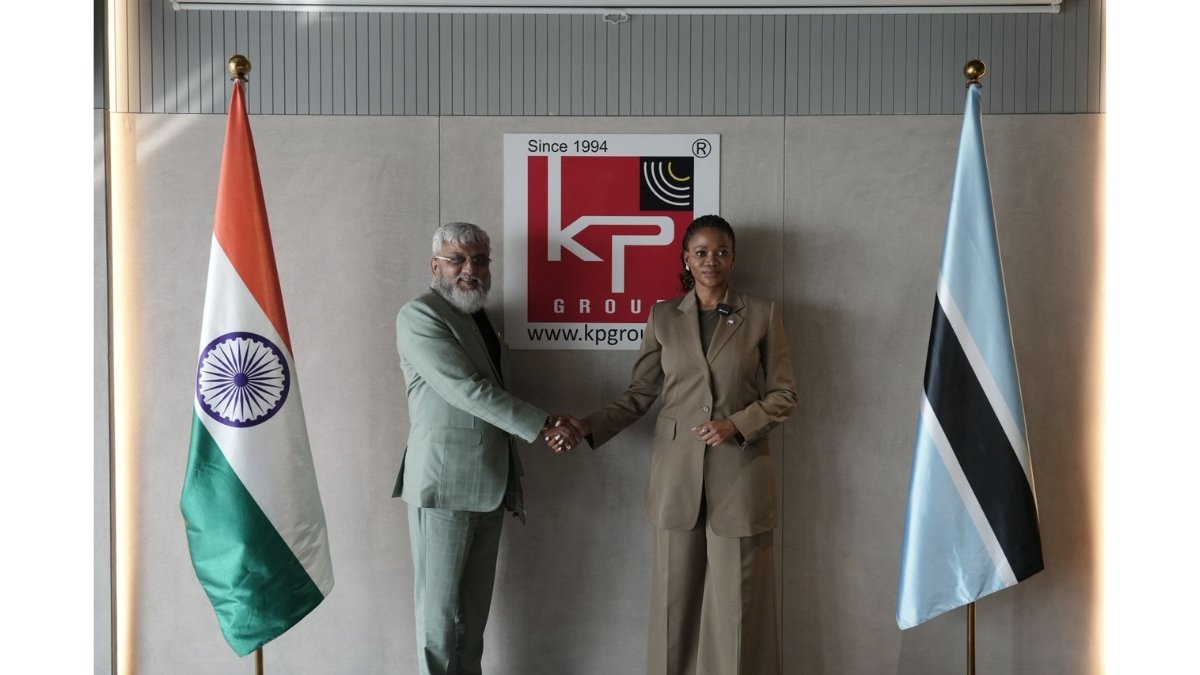
Matar (Gujarat) [India], December 22: KP Group has signed a Memorandum of Understanding with the Government of the Republic of Botswana to develop large-scale renewable energy generation, storage, and transmission infrastructure. The number attached to it is hard to ignore. Around $4 billion. Roughly Rs. 36,000 crore. Enough to shift energy math, not just headlines.
The KP Group Botswana renewable energy MoU could lift the country’s renewable capacity to nearly 5 GW. For Botswana, that feeds a stated ambition of becoming a net-zero nation by 2030. For KP Group, it marks a clear move beyond India, into long-haul international territory.
This agreement follows the recent visit of the Hon’ble President of India, Smt. Droupadi Murmu, to Botswana. Diplomatic timing helped, sure. But the substance here goes far deeper than optics.
KP Group Botswana renewable energy MoU: Who’s involved, and why it’s not trivial
The MoU was signed between Botswana’s Ministry of Minerals and Energy and KP Group, which includes KPI Green Energy Limited, KP Energy Limited, and KP Green Engineering Limited.
The framework covers planning, development, and execution of renewable energy projects and the transmission lines that make them usable. That last part matters more than most people admit. Power without grids is noise. Botswana seems to know that.
The goal is twofold. Strengthen domestic energy security. Then, quietly, position Botswana as a clean power exporter in the region. Not someday. Structurally.

A $4 billion build-out, piece by piece
Under the KP Group Botswana renewable energy MoU, both sides will work on projects requiring capital investment of about $4 billion. The target is close to 5 GW of renewable energy capacity, driven largely by solar and wind, backed by energy storage.
Transmission is baked in, not stapled on. High-voltage lines within Botswana will be upgraded. New ones will be built. Interconnections with neighbouring countries are part of the plan. Regional power trade is not an afterthought here. It’s the point.
This is where the deal stops sounding theoretical and starts sounding industrial.
What KP Group actually brings to the table
KP Group will lead technical and commercial development across the lifecycle. Feasibility studies. Project design. Financing. Construction. Commissioning. Long-term operation and maintenance. The unglamorous parts too.
That’s not bravado. KP Group already manages a 6 GW renewable energy portfolio in India and is moving toward a 10 GW target by 2030. Scale is familiar terrain.
The group also operates in green hydrogen and ammonia, battery energy storage systems, offshore and floating solar. On the manufacturing side, there’s a 45-acre fabrication and galvanising facility in Matar, Gujarat, housing Asia’s largest galvanising kettle. Not a trivia point. Infrastructure like this decides timelines.
Botswana’s position, clearly stated
Hon. Bogolo Joy Kenewendo, Botswana’s Minister of Minerals and Energy, called the MoU a step toward a sustainable and secure energy future. The language was measured. The intent was firm.
Botswana wants faster clean energy deployment. Stronger regional connectivity. Long-term economic and environmental returns. Skills development is not optional. It’s embedded.
As part of the KP Group Botswana renewable energy MoU, the company will support 30 scholarships every year for Botswana citizens. The focus areas include renewable energy, engineering, sustainability, and allied fields. That’s how transitions stick. People first. Assets follow.
KP Group’s lens: scale, but with patience
Dr. Faruk G. Patel, Founding Promoter of KP Group, framed the MoU as a shared vision rather than a transaction.
Botswana’s solar and wind potential, he said, is immense. The partnership aims to unlock it through scalable and sustainable solutions. Net zero by 2030 is a milestone, not the finish line. The broader goal is long-term economic value and regional clean energy exports.
In other words, build once. Build right.
Why this MoU feels different
Africa has seen plenty of MoUs. Many dissolve quietly. This one stands out for uncomfortable reasons.
The capital number is explicit. The capacity target is specific. Transmission is central, not decorative. Scholarships are written in, not promised later.
And then there’s the alignment. Botswana offers political stability and policy clarity. KP Group offers execution experience and industrial depth. Neither side looks like it’s experimenting.
India’s clean energy muscle, exported
From an Indian vantage point, the KP Group Botswana renewable energy MoU reflects a shift that’s been brewing. Indian renewable firms are no longer content staying domestic. They are exporting development models, not just equipment.
Africa’s energy demand is rising. So is scrutiny. Partners who overpromise don’t last. Those who build grids, train people, and stay for operations tend to.
Botswana, in turn, diversifies its partnerships. Less dependency. More balance.